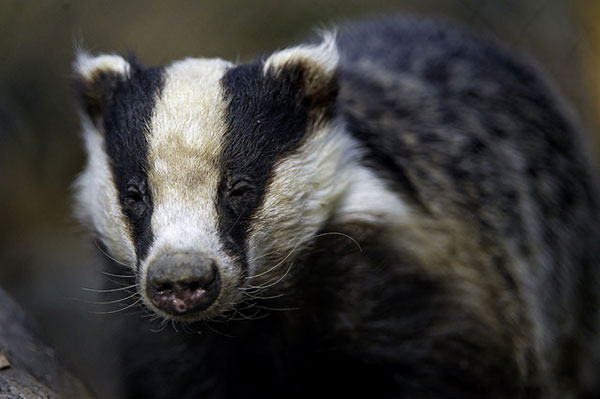
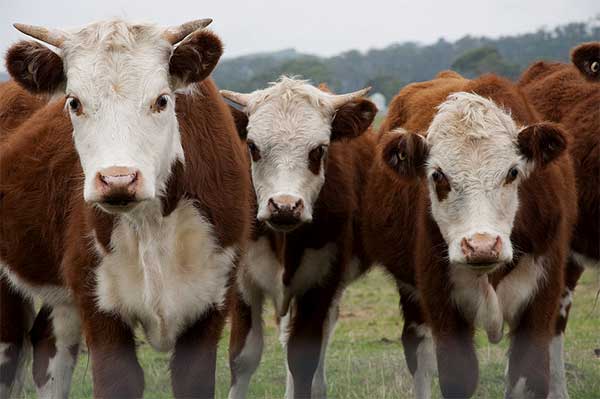
In an innovative project in deepest Gloucestershire, volunteers are training to vaccinate badgers against bovine tuberculosis. But will this trial work? And will a cull take place anyway?
With the practised efficiency of someone who has done it countless times before, Fiona Rogers takes a syringe and presses the needle firmly into a tablet-shaped, 5cm-thick silicon pad. The texture of the pad replicates badger muscle, and is covered in soft, light-grey ‘fur’ to make it look and feel more realistic.
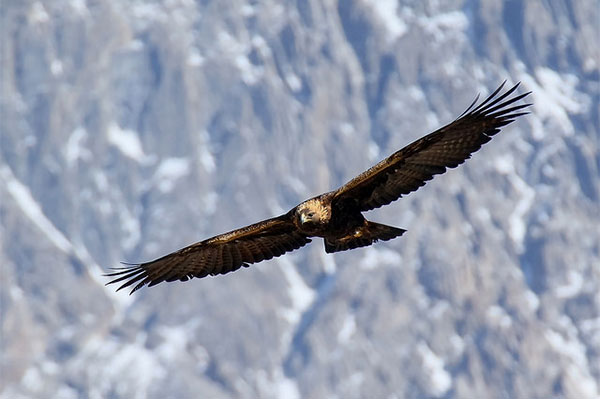
The isle of Harris has been described as the best place in Europe to see golden eagles. What makes it so good and what does it teach us about their behaviour?
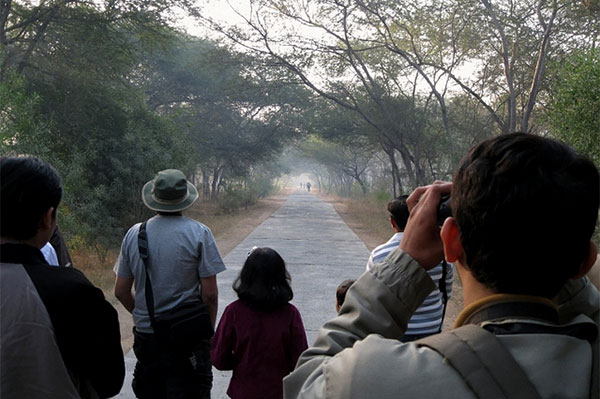
In the airy kitchen of his self-built eco-house filled with Hebridean sunshine, Robin Reid is directing me to a birdwatching nirvana on his Ordnance Survey map. The RSPB conservation officer for the Western Isles points to Tarbert, on the isle of Harris, then follows the A859 with his finger, first west, then north as it snakes its way through the island’s mountainous interior.
Pole position

Credit: James Fair
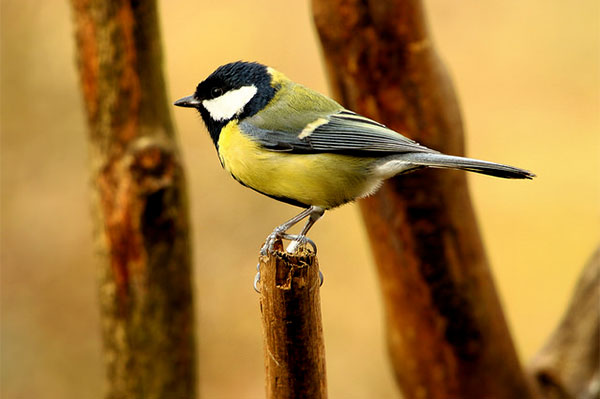
The white stork was once common throughout much of the UK. James Fair meets the conservationist on a mission to return the bird to its former prominence.
Driving through northern Spain earlier this year, Charlie Burrell – a rewilding enthusiast and the owner of the 1,400ha Knepp Castle estate in Sussex – noticed clusters of unusual, artificial structures placed at regular intervals along the side of the autoroute.
If we buy cheap food, wildlife can pay the price. James Fair investigates the hidden costs of farming non-organically and learns how agriculture can become more compatible with biodiversity.
Flushed from the shallow, seasonal pond, a flock of teal wheels in the December sky, and two, then three, snipe erupt from a clump of reeds, zigzagging erratically in typical fashion. Daylesford Organic Farm’s environmental scientist Tim Field sighs with satisfaction: “If you get a peregrine among that lot, then you’re really seeing something.”

Losing ground?

Photo: James Fair
Interview: 2021

Wildlife flourishes alongside livestock at Yew Tree Farm near Bristol. But as the city struggles to provide housing for its growing population, farmer Catherine Withers faces losing her land to development.
"Piggy, piggy, piggies,” Catherine Withers calls as we wander back from the fields towards the farmhouse buildings. “Do they come when you call?” I ask, unnecessarily as it turns out, as seven or eight joyful bundles of perfect pinkness come running towards us like oversized puppies, as giddy as spring lambs in their excitement.
Conservationists in peril
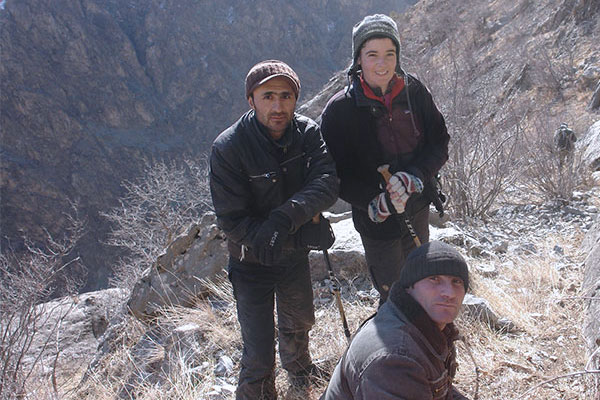
Image courtesy Tanya Rosen
Conservationists in peril: Scientists, campaigners risk their lives for their work
A leopard scientist who was threatened by a gunman in Tajikistan and Iranian cheetah experts who have been imprisoned for just doing their job are just some of the conservationists who have put their lives on the line for their work and their passion for nature.
Mongabay | 2020
John Burton was a pioneer for the concept of buying an acre of rainforest to protect it. As he steps down from running the World Land Trust, he talks about conservation, eco-colonialism – and cats.
Back in May 1989, when Margaret Thatcher was Prime Minister and General Manuel Noriega was nullifying an election that had ousted him as president of Panama, down the road in the tiny Central American country of Belize, plans were afoot to buy 44,000 hectares (ha) of land for the purpose of conserving the rainforest and its wildlife.
The RSPB must change society’s values and the way in which people interact with wildlife in order to reverse the declines in UK biodiversity seen over the past 40 or 50 years.
That’s the view of the [former] director of conservation Martin Harper, who was speaking to BBC Wildlife in 2017 about the society’s plans to engineer a transformation in the fortunes of Britain’s birds, bats and butterflies over the next one and a half decades.
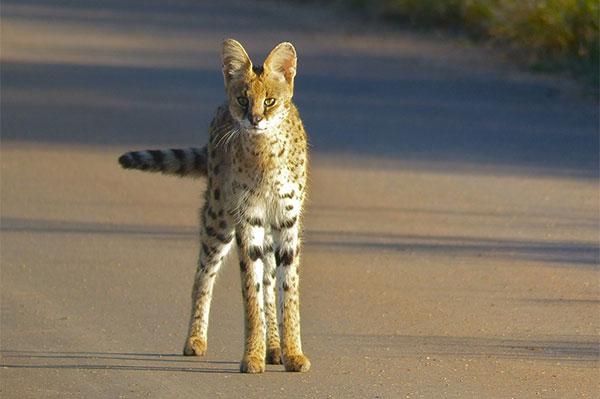
He was traumatised by the loss of his mother, so photographer Suzi Eszterhaz adopted him. But could she be a good parent to an orphaned serval?
“I nearly killed Moto twice. I was feeding him milk with a baby’s bottle, and though I had found a teat with the smallest possible hole, it was still too big for a baby serval. Once he choked so badly that, in a panic, I rang a vet working nearby. ‘He’s dying, he’s dying,’ I screamed down the phone...”
As his revelatory new memoir goes on sale, Chris Packham shares the secrets of his past with BBC Wildlife. Interview by James Fair and Ben Hoare
A photo taken around 1986 shows the original line-up of the ground-breaking children’s natural-history programme The Really Wild Show. There’s Terry Nutkins looking avuncular and reassuring, Nicola Davies resembling an eccentric aunt and, of course, the young Chris Packham. Nutkins and Davies are smiling affably at the camera, but Packham glowers under his peroxide blond quiff, arms folded, seemingly keeping the world, or at least the people in it, at bay.
What has WWF ever done for us?

Credit: James Fair
One of the world’s top conservation groups has a confession to make – it’s failed to stop global wildlife declines. But the new head of campaigns for its UK operation, veteran environmentalist Tony Juniper, believes he has the solution.
Working for WWF must sometimes feel like acting as the world’s environmental peace-keeping force – you’re trying to do the right thing, but you’re still hated on all sides.

The $80m million question

BBC Wildlife Magazine | April 2021
Photo: Anup Shah | Minden Picrures | FLPA
The world spends a huge amount of money on orangutan conservation every year but their numbers are still declining.
What’s going on, why isn’t palm oil to blame and what can we do to arrest the downward curve?
BBC Wildlife Magazine | August 2020
"... Animals slaughtered right in front of you”
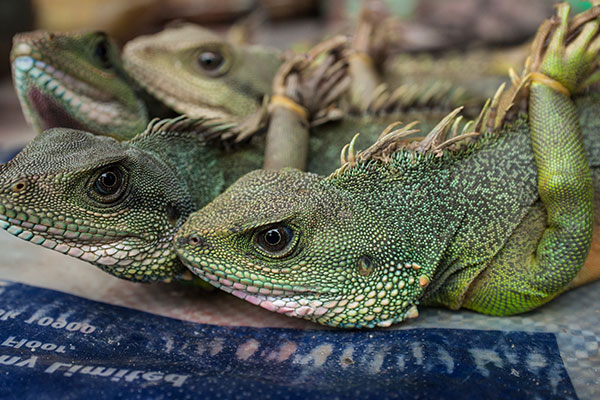
Photo: Shutterstock
“There are places where you have thousands of animals, cages stacked up on each other, animals being slaughtered right in front of you”
With COVID-19 placing bushmeat trade firmly in the spotlight, what does the future hold for wildlife markets and the health of the human population?
BBC Wildlife Magazine | August 2020
Every year, 200 million live animals pass through Heathrow. Most are part of the legal worldwide trade, but many rare species of wildlife are not. James meets the team looking for the lemur in your luggage.
In a small, nondescript office in the Animal Reception Centre at Heathrow Airport, CITES team officer Ann Ainslie points to some green bottles lined up on a shelf. She picks one up so that I can clearly see the contorted, ghostly body of a small, hooded reptile staring at me with vacant eyes.
Most of us will probably chuckle at this photo, but what’s funny about it – and at a time when the state of the natural world is hardly a laughing matter, is it OK to find humour in wildlife?
Some of the biggest talking points from Planet Earth II were about story lines that veered unsettlingly towards tragedy – the marine iguanas running for their lives from the racer snakes in Islands or the hawksbill turtle hatchlings crawling heart-breakingly towards artificial light sources on Barbados in Cities. But arguably it was the moments of comedy that left audiences coming back for more
“Come on,” whispers cameraman Mark Deeble to the GoPro attached to the inside of his hide. “You can do it. One more footstep, that’s all the croc needs.”
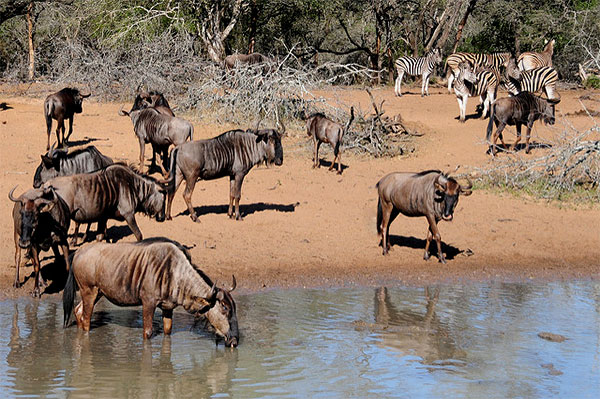
As if listening to him, the wildebeest takes another step out into the Grumeti River, and in a split second, the lurking crocodile launches itself, snapping its jaws around a single, spindly leg, dragging it unceremoniously to its doom.
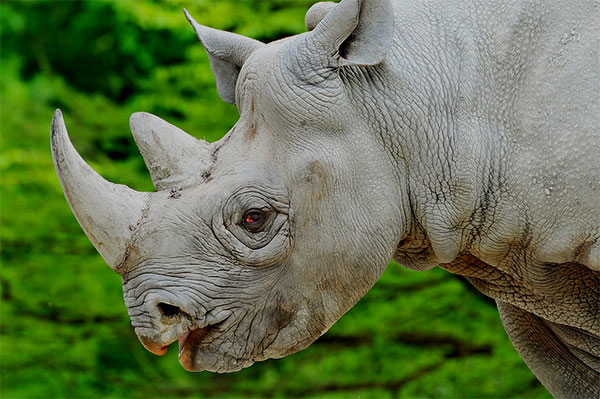
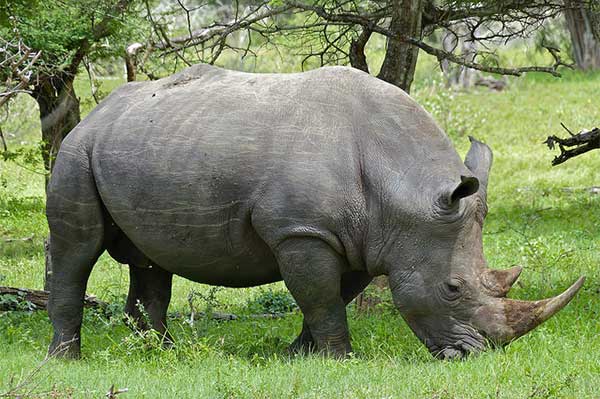
Saving rhinos from extinction requires people to stop buying their horns, but the science of demand reduction is a complex business.
The announcement in May of this year that the governments of the USA and Vietnam were launching a new partnership to tackle wildlife crime sounded like good news, but not everybody was convinced.
Whether it’s Tarzan or Dr Dolittle, we romanticise the idea of humans who can communicate freely with other animals. But is the idea of conversing with a killer whale or a kangaroo anything more than a pipe dream, and even if it’s not, what could it achieve?
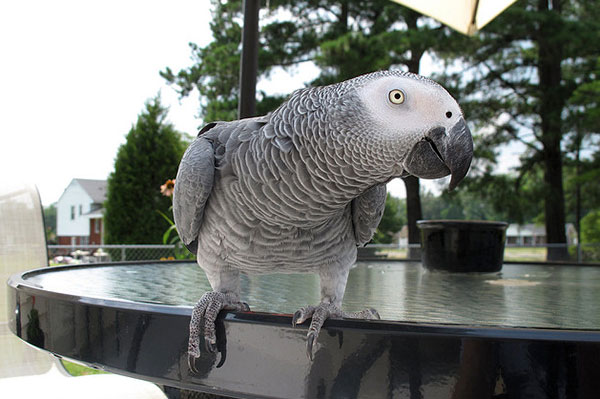
Some 20 years ago, while being interviewed by a journalist from the New York Times, the animal cognition expert Dr Irene Pepperberg found herself holding a conversation with her research subject, Alex – an African grey parrot. “Calm down!” Alex said when Pepperberg came into the room. “Don’t tell me to calm down!” she retorted.
TV presenter Chris Packham said earlier this year that his Asperger Syndrome has given him special abilities, and he’s not the only one.
Half an hour into our interview and as he’s showing me around Port Sunlight River Park in the Wirral, 17-year old Elliot Montieth runs down to the foreshore of the River Mersey. “Two common sandpiper,” he remarks to park ranger Anne Litherland. “That’s a site first.”

Turtle conservation

Mongabay | March 2021
Photo: James Fair
Turtle conservation hits the SPOT in North Cyprus
Green and loggerhead turtle nest counts have increased by 162% and 46% respectively in less than two decades on North Cyprus in the Mediterranean. The increase has been achieved through preventing nests being raided by dogs and foxes, and protecting the beaches from tourism development.
Dolphins abound off the coast of Tasmania – and the island is home to an astonishing number of marsupials, too.
In my day job as travel editor of BBC Wildlife Magazine, I’m working on a feature about the world’s greatest wildlife spectacles. I’ve been e-mailing filmmakers, photographers, writers — anyone, indeed, I think might have a legitimate opinion on what constitutes a truly galumphing, gob-smacking or just plain gorgeous wildlife experience.
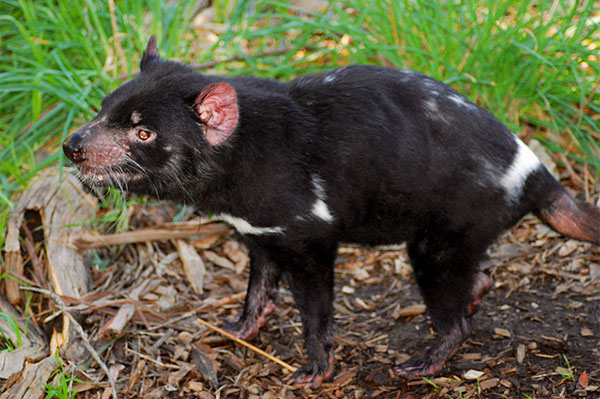
The real Tasmanian devil has an extraordinary biology and is surprisingly shy, unlike the popular cartoon character. But attitudes are at last changing.
“People are definitely confused by devils,” says Greg Irons, owner and manager of Bonorong Wildlife Sanctuary just outside Tasmania’s state capital Hobart. “I’ve been asked: ‘Are they related to pigs? Are they rodents?’ Look, we see a lion and we immediately know it’s a cat. But trying to suss out a devil – that’s hard.”
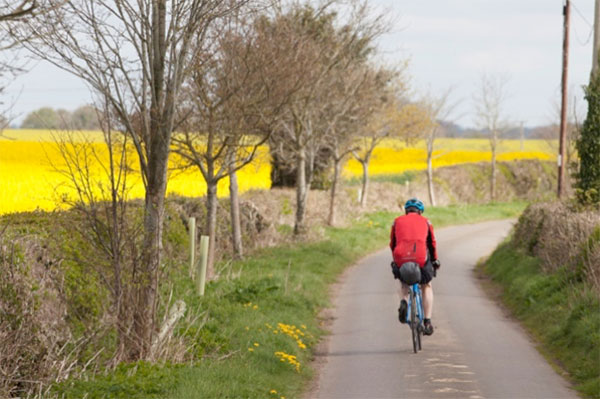
When the season of new life arrives in the UK, it advances north at 2mph. James Fair gets into gear to track the welcome signs of spring on a bicycle.
In 2015, the British Science Association calculated the speed of spring advancing north through Britain at 2mph (3.2kmh). Different events moved at different rates. Flowering hawthorn, for example, crept along at a relatively sedate 1.9mph, equating to 45.6 miles a day or the length of the mainland (600 miles) in 13 days. I reasoned I could easily cover this on a bicycle in the same time frame, though I would have to cover a greater distance (70–80 miles each day) because I would inevitably be zigzagging as I pedalled.

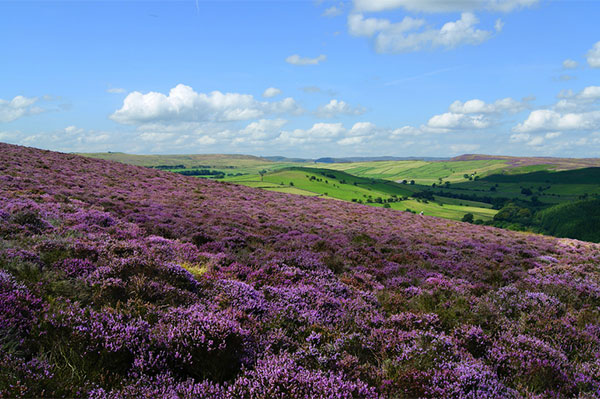
Is heather moorland a cherished British landscape that can only be maintained on the back of grouse-shooting or an artificial habitat that’s bad for birds of prey and bad for the environment?
Come 12 August and the fells around Bolton Abbey, in the Yorkshire Dales, will resound to the sound of shotguns. Yes, the grouse-shooting season will be underway and wealthy clients will be forking out thousands of pounds for a single day of this uniquely British past-time.
Judy Avey-Arroyo runs the world’s strangest animal rescue centre...
“Sloths are the lowest term of existence in the order of animals with flesh and blood,” wrote the French naturalist Georges Buffon in his 18th-century masterpiece Histoire Naturelle. In his case for the prosecution, he cites sloths’ small eyes, their lack of incisors and canines, hair that resembles dried grass, short legs and excessively long nails.
Experts say rising meat consumption is the biggest factor impacting wildlife, but are conservationists doing enough to highlight the harm caused by our appetite for beef, pork and chicken?
Now, be honest, how often do you eat meat? Every day? A few times a week? Just on special occasions? What about dairy – and eggs? Do you seek out beef or pork that was reared in the UK or choose chicken because you think they’re better for the environment? What about fish – do you see that as a more sustainable option?
The badger cull is the biggest, planned, public-funded intervention in the British countryside in the past 50 years.
Campaigners have taken out a Judicial Review against Natural England, which questions the processes that the public body followed in relation to the badger cull. In July 2018 a High Court judge will hear two Judicial Reviews relating to the Government’s policy of culling badgers in certain areas of the country to reduce levels of bovine tuberculosis (bTB) in cattle.
South Africa has abandoned a move to reopen the rhino horn trade, but with poaching still critically high, pro-traders argue it’s the only solution.
On a visit to Vietnam in 2011, the wildlife trade investigator Karl Ammann made a discovery that, he argues, fundamentally changes the debate on legalising the international trade in rhino horn. Evidence his undercover team unearthed shows that middleclass Vietnamese and Chinese are not only buying powdered horn as a cure for cancer – for which it has consistently been shown to have zero effect.
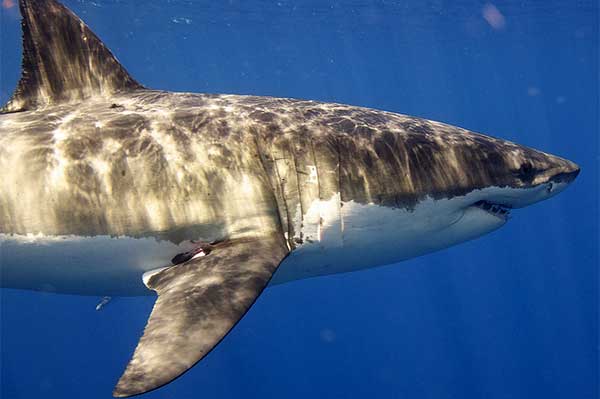
Why do we persevere in the belief that sharks are terrifying creatures that only want to rip us to pieces? And how does that affect the way we protect and conserve them?
We’re at the London Aquarium, and Deadly 60 presenter Steve Backshall is trying to put my mind at rest because in a few minutes we’re going to be putting on masks and wetsuits and getting into the tank with the sharks. But hey – these sharks only eat fish, so I’ve got nothing to worry about...
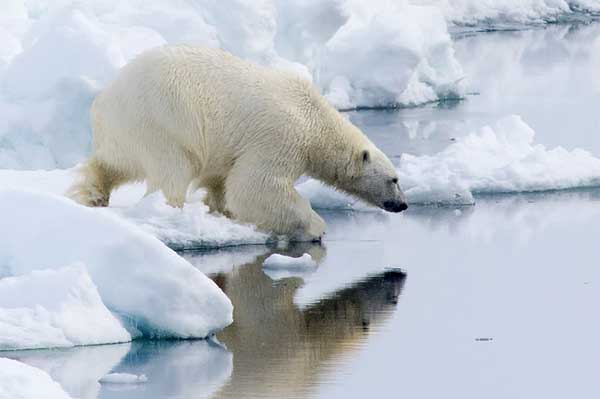
Few animals divide conservationists, scientists and politicians as much as the polar bear. Is it doomed or doing fine? James Fair discovers that one thing will determine the future of this Arctic icon – ice.
It’s August 2063, and pilot Bob Randall of the Arctic Bear Protection Force (ABPF) is preparing for a flight. Loaded onto his helicopter is 12,000kg of bear chow, which he’s transporting from Iqaluit in the Canadian High Arctic province of Nunavut to the wild east coast of Baffin Island. There it will be dumped to feed an estimated 100 polar bears that became stranded in February when the seaice broke up – the earliest date on record – and are now beginning to starve.
Against all odds

Photograph | James Fair
If you think your life’s stressful, consider the prospects of a baby turtle. Our environment editor James Fair travelled to North Cyprus to investigate the work being done to help them survive
Imagine, just for a moment, that you are a newly hatched baby turtle. Together with up to 120 of your siblings (mostly sisters, in fact), you spend the first day or so of your life under perhaps 60cm of sand – the equivalent, for a human, of being buried alive to a depth of about 15m. Eventually, you dig your way towards the surface and, as night falls and the temperature drops, you emerge, blinking, into the big, wide world for the first time.
The armour that protects pangolins makes them acutely vulnerable to the deadliest predator of all. James Fair reports on the conservationists fighting to save these amazing mammals from Homo sapiens.
Wildlife photographer Suzi Eszterhas first came across a pangolin while photographing African wild dogs hunting at night in Botswana. As Suzi puts it, “Anything wild dogs come by, they mess with, and they messed with this pangolin.” But pangolins have a defence mechanism, rolling up into a ball to present an unappetising and impenetrable barrier of keratin scales to ward off hungry carnivores, like hedgehogs do with their spines. The dogs would have ripped the pangolin to shreds if they’d had the opportunity, but they soon lost interest.
The world leapt into a frenzy of outrage when Cecil was killed by an American dentist, but trophy-hunting may not be the real problem.
A few years ago Dr Craig Packer, one of the world’s leading lion conservationists, was asked to investigate an outbreak of man-eating lions in the south of Tanzania by the government. “We interviewed 500 victims, either relatives of people who’d been killed or survivors, to try and work out what was happening,” explains Packer. "At some point the head of a European conservation organisation said, ‘I wish you wouldn’t do this research'...
From the hedgehog to the hen harrier, MPs act as cheerleaders for the UK's rarest species, but aside from giving them a photo op in a local newspaper, does it benefit the wildlife?
It’s a blisteringly hot day in Central London in early July, and some 40 people are listening attentively to natural history TV presenter Steve Backshall handing out gongs to MPs. First up is a special mention for Oliver Colvile. “Oliver is well known as a champion of the hedgehog,” says Backshall to low murmurs of appreciation from the audience.
Born to be wild
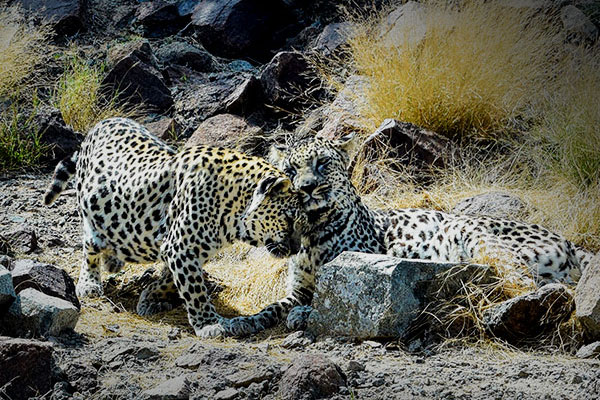
Photo: SHUTTERSTOCK

July 2021
Born to be wild: A daring vision of the Arabian leopard’s future
The number of Arabian leopards has long been in decline, and it’s thought there are now less than 200 adults left in the wild. But a new decade-long initiative could start to reverse that.
Unbridled Nature
Credit: James Fair
Rewilding has been in the news lately, associated mainly with re-introducing lost predator species to the UK. But as a pioneering new farming model in Sussex demonstrates, it’s much more important than that.
On a short walk around Knepp, the estate’s ecologist Penny Green stops to point out three different oak trees. One is a tiny sapling, no more than a foot or so high that is doomed to be browsed to oblivion in the next year or so. Nearby is a 400-year-old gnarled and stately veteran, home to a little owl, that lives in a burrow at its base, and a rare bracket fungus. A fine specimen, but one that tells us little about the Knepp experiment because it was already mature centuries long before anyone felt the necessity to consider coining a term such as ‘rewilding’.
The management of huge swathes of Scottish moorland and forest has been making headlines, with passions running high in support of the varying approaches to land stewardship. Now there’s a bold new vision for the future of the Cairngorms – and it’s not rewilding.
Next time you’re lucky enough to find yourself in the Cairngorms, follow the road through the spectacular Caledonian pine forest at Glenmore Forest Park – listening out for the cheery trill of crested tits if you’re on foot – and then head up the ever-steeper gradient until you emerge from the trees and arrive at Coire na Ciste. Before climbing further to where the funicular railway takes you up Cairn Gorm in search of ptarmigan and mountain hares, pause to admire the thickly forested landscape below and the ridge that stretches from Craiggowrie to Meall a’ Bhuachaille. It’s not just a fabulous view – you’re overlooking Britain’s largest wildlife restoration programme, Cairngorms Connect.
Contact James
Call: 07766 706 358

© James Fair
| all rights reserved

Website by Elizabeth Walsh